
Save St Pete Wildlife

ARE YOU POISONING WILDLIFE OR PETS WITHOUT KNOWING IT?

You could be if you (or one of your neighbors) are using one of the below listed “highly dangerous” rodenticides aka “rat poisons”.  Read on…

  • According to the EPA, more than 100 pets each year in the U.S. are reported to have died from accidental rodenticide poisoning.

  • In a recent study, 77% of the dead raptors found in and around New York City Parks tested positive for rodenticide poisoning, including Flaco the Eurasian Eagle owl that had escaped from Central Park Zoo.

  • From 2017 to 2021, there were 40,808 total human exposure cases to rodenticides reported to America’s Poison Centers, with over 70% being children under the age of 5.

  • For more information: https://www.biologicaldiversity.org/campaigns/Safe-Rodent-Control/rodenticide-risks.html

WHAT ARE RODENTICIDES AND HOW DO THEY WORK?

Rodenticides (aka “rat poison”) are mainly toxins used to control the population of rodents.  They are often used in bait stations, but the rodents do not die inside the stations.  After eating the bait, rats and mice go back into the environment and can take more than a week to die.  During that time, they may return to the bait station and ingest many more times the lethal dose.  If it has been poisoned by a highly dangerous form of rodenticide, the poisoned rodents are a toxic ticking time bomb for any animal who preys on them.

For more information: https://cwhl.vet.cornell.edu/system/files/public/cwhl-fact-sheetsrodenticide.pdf

AREN'T ALL RODENTICIDES THE SAME?

No.  Some affect the target animal, usually a rat or mouse, with little to no risk of Secondary Poisoning to wildlife or pets.  Others, not so.  Secondary Poisoning occurs when the poison remains active, even after the target animal has ingested a lethal dose or even died, potentially poisoning anything that consumes the target animal.  Please consult the below Comparison Matrix to evaluate the risks to pets, wildlife and family…after all, if there is an accidental poisoning, having an antidote should also be considered.

Comparison Matrix

  • FGAR = First Generation Anticoagulant Rodenticide.  Usually requires multiple feedings.

  • SGAR = Second Generation Anticoagulant Rodenticide.  Developed because FGARs were found to be not as effective.
    @ Some rodenticides are sold under different retail names or are combined with other rodenticides. 

  • If a combined product, consider the highest risk of each (read the label)

HOW DO I AVOID THESE DANGEROUS RODENTICIDES IN FLORIDA?

In 2015, recognizing the dangers to wildlife, pets and children, Federal regulations prohibited the retail sale of SGARs to the public.  Additional restrictions vary across North America, with British Columbia, California and Massachusetts (pending) having bans on SGARs.  In Florida, consumers can purchase FGARs at a retail store but SGARs (along with zinc phosphate and strychnine) are restricted to licensed pest control companies.  If you are considering such a company, get it in writing what they intend to use.  Finally, although all SGARs are restricted to licensed use only in Florida, they can easily be purchased online by Florida residents with little to no restrictions, contrary to state and Federal law.

For more information: https://www.audubon.org/magazine/internet-has-rat-poison-problem

ARE THERE OTHER WAYS TO DEAL WITH RODENTS?

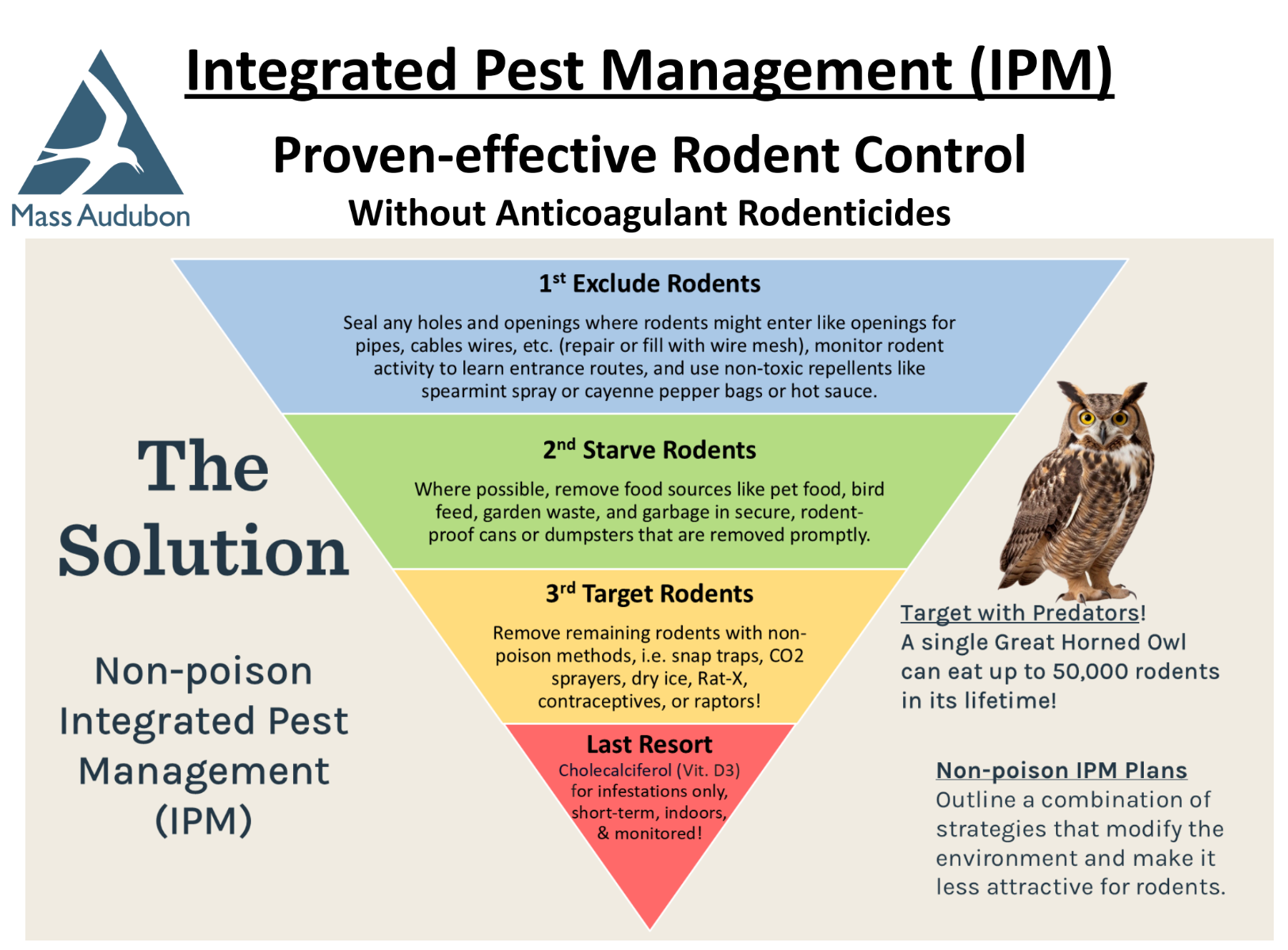
This section will briefly discuss other alternatives such as integrated pest management.

For more information: https://raptorsarethesolution.org/got-rats/

WHAT HAPPENS IF WE IGNORE THE WARNINGS?

This is the “heart string” section.  To briefly discuss the Safety Harbor owl story with link.  “Sadly, we have already witnessed the devastating impact of these dangerous rodenticides locally…”

For more information: https://safetyharborowls.weebly.com/

HOW CAN I MAKE A DIFFERENCE?

Call to action section.  Donate or get involved.  “We can make a difference…”

ADDITION RESOURCES

Oregon State: https://agsci.oregonstate.edu/sites/agscid7/files/ag-ed-sci/rodenticides_and_secondary_poisoning2.pdf

National Pesticide Info Center: https://www.nps.gov/common/uploads/teachers/lessonplans/rodenticides_FactSheet.pdf